Publications
Highlighted
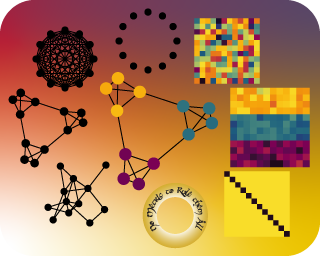
No Metric to Rule Them All: Toward Principled Evaluations of Graph-Learning Datasets
International Conference on Machine Learning (ICML)
·
2025
We introduce RINGS, a principled framework to assess the quality of graph-learning datasets by measuring differences between the original dataset and its perturbed representations.
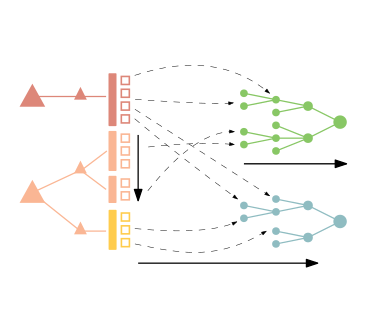
The Power of Network Pluralism: Multi-Perspective Modeling of Heterogeneous Legal Document Networks
arXiv
·
2025
We introduce Network Pluralism as a conceptual framework to leverage multi-perspectivity in network science and demonstrate its utility through a case study on the German legal system.
All
2026
Real Preferences Under Arbitrary Norms
International Conference on Autonomous Agents and Multiagent Systems (AAMAS)
·
2026
We show that any preference profile with n voters and m alternatives can be embedded into d-dimensional Euclidean space for d ≥ min{n,m-1} under all p-norms and establish that any pair of rankings can be embedded into R² under arbitrary norms, significantly expanding the reach of spatial preference models.
Relational Dissonance in Human-AI Interactions: The Case of Knowledge Work
ACM CHI Conference on Human Factors in Computing (CHI)
·
2026
We introduce the concept of relational dissonance to describe the divergence between individuals’ articulated accounts and enacted relationships with anthropomorphic conversational agents.
2025
Low-Dimensional Embeddings of High-Dimensional Data
arXiv
·
2025
We critically review current approaches to dimensionality reduction and discuss best practices and open challenges in the field.
Model-Agnostic Approximation of Constrained Forest Problems
International Symposium on Distributed Computing (DISC)
·
2025
We present the shell-decomposition algorithm, a model-agnostic meta-algorithm that efficiently computes a (2+Ɛ)-approximation to Constrained Forest Problems for a broad class of forest functions describing network design problems with edge subsets as solutions.
New Limits on Distributed Quantum Advantage: Dequantizing Linear Programs
International Symposium on Distributed Computing (DISC)
·
2025
We show that there is no distributed quantum advantage for any linear program and give a new separation between quantum algorithms and classical algorithms.
No Metric to Rule Them All: Toward Principled Evaluations of Graph-Learning Datasets
International Conference on Machine Learning (ICML)
·
2025
We introduce RINGS, a principled framework to assess the quality of graph-learning datasets by measuring differences between the original dataset and its perturbed representations.
The Power of Network Pluralism: Multi-Perspective Modeling of Heterogeneous Legal Document Networks
arXiv
·
2025
We introduce Network Pluralism as a conceptual framework to leverage multi-perspectivity in network science and demonstrate its utility through a case study on the German legal system.
2024

All the World's a (Hyper)Graph: A Data Drama
Digital Scholarship in the Humanities
·
2024
Raw data stem from all of Shakespeare’s plays / We model them as graphs in many ways / And demonstrate representations matter.
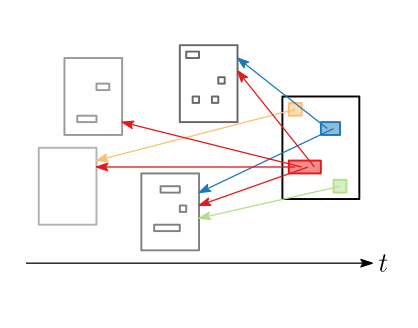
Legal Hypergraphs
Philosophical Transactions of the Royal Society A: Mathematical, Physical and Engineering Sciences
·
2024
We introduce temporal hypergraphs as representations of legal network data, demonstrating their utility in case studies on legal citation networks and legal collaboration networks.

Mapping the Multiverse of Latent Representations
International Conference on Machine Learning (ICML)
·
2024
We introduce Presto, a topological framework to explore and exploit representational variability in latent-space machine-learning models.
pymnet: A Python Library for Multilayer
Networks
Journal of Open Source Software
·
2024
We introduce pymnet, a Python package providing essential data structures and computational tools for multilayer-network analysis and visualization.
2023
Beyond Flatland: Exploring Graphs in Many Dimensions
Universität des Saarlandes
·
2023
Corinna’s computer-science dissertation which, based on my KDD 2021, AAAI 2022, DSH 2023, ICLR 2023, and KDD 2023 publications, explores graphs in five dimensions: descriptivity, multiplicity, complexity, expressivity, and responsibility.
Evaluating the "Learning on Graphs" Conference Experience
arXiv
·
2023
We present the results of a survey distributed to participants of the first “Learning on Graphs” conference.
Law Smells: Defining and Detecting Problematic Patterns in Legal Drafting
Artificial Intelligence and Law
·
2023
Building on the computer science concept of code smells, we initiate the systematic study of law smells (i.e., patterns in legal texts that pose threats to the comprehensibility and maintainability of the law), introduce a comprehensive law smell detection toolkit, and demonstrate its utility on twenty-two years of legislation from the United States Code.
Ollivier-Ricci Curvature for Hypergraphs: A Unified Framework
International Conference on Learning Representations (ICLR)
·
2023
We develop Orchid, a flexible framework generalizing Ollivier-Ricci curvature to hypergraphs, prove that the resulting curvatures have favorable theoretical properties, and demonstrate that they are both scalable and useful to perform a variety of hypergraph tasks in practice.
Reducing Exposure to Harmful Content via Graph Rewiring
ACM SIGKDD Conference on Knowledge Discovery & Data Mining (KDD)
·
2023
We introduce Gamine, a fast greedy algorithm for reducing the exposure to harm in recommendation graphs via edge rewiring, based on the theory of absorbing random walks.
Who can Submit an Excellent Review for this Manuscript in the Next 30 Days? - Peer Reviewing in the Age of Overload
ACM/IEEE Joint Conference on Digital Libraries (JCDL)
·
2023
We summarize the learnings from a panel discussion on the contemporary challenges of scientific peer review.
2022
Differentially Describing Groups of Graphs
The AAAI Conference on Artificial Intelligence (AAAI)
·
2022
Given a set of graphs and a partition of these graphs into groups, we introduce Gragra (Graph group analysis) to discover what graphs in one group have in common, how they systematically differ from graphs in other groups, and how multiple groups of graphs are related.
Rechtsstrukturvergleichung
Rabels Zeitschrift für ausländisches und internationales Privatrecht
·
2022
Theoretically grounded in systems theory and complexity science, we propose structural comparative law as a data-driven approach to explore the similarities and differences between the structures of legal systems.
Sharing and Caring: Creating a Culture of Constructive Criticism in Computational Legal Studies
MIT Computational Law Report
·
2022
Building on the scientific literature regarding reproducible research and peer review, we introduce seven foundational principles for creating a culture of constructive criticism in the transdisciplinary field of computational legal studies.
2021
A Breezing Proof of the KMW Bound
Symposium on Simplicity in Algorithms (SOSA)
·
2021
We give a simple and (in the extended version) fully self-contained proof of the KMW lower bound, proving a hardness result for several fundamental graph problems in the LOCAL model of distributed computing.
Graph Similarity Description: How Are These Graphs Similar?
ACM SIGKDD Conference on Knowledge Discovery & Data Mining (KDD)
·
2021
We treat graph similarity assessment as a description problem, rather than as a measurement problem. Having formalized this problem as a model selection task using the Minimum Description Length principle, we propose Momo (Model of models), which solves the problem by breaking it into two parts and introducing efficient algorithms for each.
Measuring Law Over Time: A Network Analytical Framework with an Application to Statutes and Regulations in the United States and Germany
Frontiers in Physics
·
2021
We present a comprehensive framework for analyzing legal documents as multi-dimensional, dynamic document networks and demonstrate its utility by applying it to an original dataset of statutes and regulations from two different countries, the United States and Germany, spanning more than twenty years (1998–2019).
Simplify Your Law: Using Information Theory to Deduplicate Legal Documents
International Conference on Data Mining Workshops (ICDMW)
·
2021
We introduce the duplicated phrase detection problem for legal texts and propose the Dupex (Duplicated phrase extractor) algorithm to solve it, leveraging the Minimum Description Length principle to identify a set of duplicated phrases that together best compress the input text.
2020
Complex Societies and the Growth of the Law
Scientific Reports
·
2020
We examine 25 years of statutory legislation in the United States and Germany through the lens of network science, finding that the main driver behind the growth of the law in both jurisdictions is the expansion of the welfare state, backed by an expansion of the tax state.
2019
Das Wertpapierhandelsgesetz (1994–2019): Eine quantitative juristische Studie
Festschrift 25 Jahre WpHG
·
2019
A legal data science project investigating the evolution of Germany’s Securities Trading Act over the first 25 years of its lifetime.
Juristische Netzwerkforschung: Modellierung, Quantifizierung und Visualisierung relationaler Daten im Recht
Mohr Siebeck
·
2019
Corinna’s legal dissertation. I introduce network science to the German legal discourse and explore what legal network science could mean. This is how I got into graphs.
2018
Quantitative Rechtswissenschaft: Sammlung, Analyse und Kommunikation juristischer Daten
JuristenZeitung
·
2018
We explain what legal data analysis is and discuss how German legal research could profit from it.